Stitch Count Chaos Knitting Hand Graphics
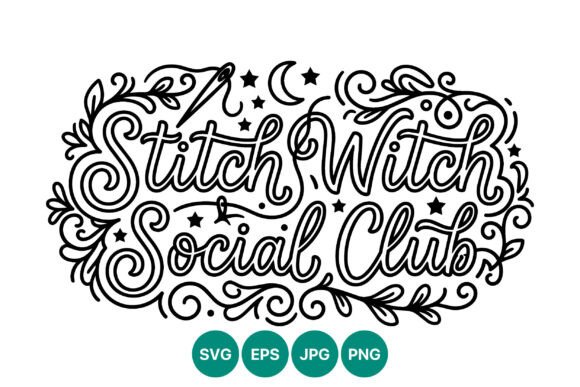
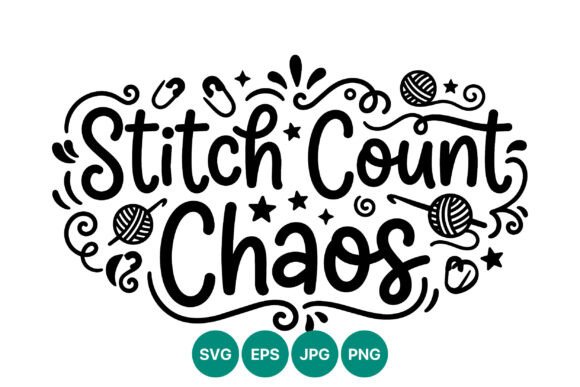
As someone who’s launched over 200 digital product listings across Etsy, Creative Market, and Shopify—mostly illustrations, SVG bundles, and Canva templates—I opened Stitch Count Chaos Knitting Hand expecting charm, but not quite this level of niche precision. The first impression? A clean, confident black-and-white hand-lettered phrase—“stitch count chaos”—anchored by playful yet intentional decorative elements: coiled yarn balls, crossed knitting needles, tiny safety pins, scattered stars, and delicate swirls. It doesn’t shout. It winks. That balance—whimsical but not cutesy, detailed but not cluttered—makes it instantly usable for serious crafters and small business owners who sell to knitters, makers, and fiber artists.
This isn’t generic “crafty” clipart. It carries a specific mood: lighthearted frustration meets proud handmade identity. Think of the customer scrolling Etsy for a mug that says *“I lost three stitches and still finished the sweater”*—this illustration lands right there. It appeals to intermediate-to-advanced knitters who appreciate humor rooted in real process, not just aesthetic fluff. Visually, it reads as modern handmade—neither ultra-minimal nor vintage-rustic. That gives it flexibility across product types without feeling off-brand.
Before adding Stitch Count Chaos Knitting Hand to any live listing, I ran it through five real-world tests:
- SVG cut test on Cricut Design Space: Clean vector paths, no stray nodes or overlapping fills. Works flawlessly for iron-on transfers, vinyl decals, and planner stickers—just ungroup and adjust spacing if needed.
- Print-on-demand preview: Scaled cleanly on a mockup tumbler (white base) and ceramic mug (matte finish). Held detail at 3" width without pixelation—PNG transparency is crisp, no halo or anti-aliasing bleed.
- Canva template integration: Dropped into a printable knitting journal cover and a social media post for a yarn subscription box. Paired effortlessly with both serif (Playfair Display) and friendly sans-serif (Quicksand) fonts—no visual competition.
- Bundle cohesion check: Grouped with two other hand-drawn knitting illustrations (a stitch marker icon and a “yarn stash” banner). All shared consistent line weight and texture—no jarring contrast in stroke or density.
- Thumbnail scan test: Shrunk to 200px wide (Etsy mobile thumbnail size). The phrase remained legible, and the central yarn ball acted as a strong focal anchor—critical for scroll-stopping power.
Where Stitch Count Chaos Knitting Hand shines most is in products where personality and community resonance matter more than stark minimalism. It works beautifully as a standalone printable wall art piece for craft rooms or studios; as a centerpiece sticker in digital sticker packs for Notion or GoodNotes planners; as the hero graphic on greeting cards for knitting guilds or fiber festivals; and as a sublimation design for tote bags sold at local maker markets. For Canva template sellers, it slots naturally into knitting class workbooks, pattern release announcements, or yarn shop email headers. As a graphic design asset, it adds warmth and authenticity to brand identities built around slow making, creative imperfection, and tactile joy.
It also strengthens product presentation—not just as decoration, but as storytelling shorthand. On an Etsy listing, pairing it with a lifestyle mockup (e.g., a cozy sweater draped over a chair beside a half-finished project) builds instant context and trust. In a digital download bundle, using it as the cover image signals niche expertise and cohesive curation—raising perceived value far beyond a single PNG file. Its balanced composition supports strong visual hierarchy, especially when layered over subtle textured backgrounds or paired with soft neutral palettes in packaging design or social media graphics.
That said, use it thoughtfully. Avoid cramming it into tiny 0.5" sticker sheets—the safety pins and fine swirls lose clarity. Don’t layer it over busy patterns or dark gradients without testing contrast first; the black-and-white palette relies on clear background separation. Skip using it as the sole element in text-heavy templates (like multi-step knitting instructions)—its decorative nature competes with readability. And while the SVG is well-structured, double-check cut lines in Silhouette Studio if you’re prepping for intricate die-cut projects—some swirl endpoints need minor smoothing for flawless physical cuts.
Practical seller notes I applied before publishing:
- Test-print the PNG on matte photo paper and uncoated cardstock—verified sharp edges and true black density.
- Previewed all four file types (SVG, PNG, JPG, and the included high-res PDF preview) inside the ZIP folder—files are named clearly and logically.
- Confirmed commercial license terms directly with the creator—yes, it covers resale of physical and digital products, including print-on-demand and Canva template licensing.
- Checked how it renders on both white and charcoal mockups—works best on light or mid-tone backgrounds; added a subtle drop shadow in Canva for dark-mode social previews.
- Paired it with four font families in sample layouts: a classic serif (Cormorant Garamond), a clean sans (Lato), a relaxed script (Pacifico), and a bold display font (Bebas Neue)—all held their own without clashing.
If you sell digital downloads, run a POD store, design Cricut projects, or create branded content for handmade businesses, Stitch Count Chaos Knitting Hand is more than just another illustration—it’s a strategic graphic design asset. It bridges humor and craftsmanship, stands out in crowded creative marketplaces, and converts because it speaks directly to a passionate, underserved audience. Used intentionally—with attention to file integrity, context, and customer expectations—it elevates everything from a $4 printable to a premium seasonal design bundle. Just remember: great illustrations don’t sell themselves. They sell when they’re tested, trusted, and placed where their personality has room to breathe.