Nigerian Flag Black White Icons
First Impression: Clean, Bold, and Purposefully Minimal
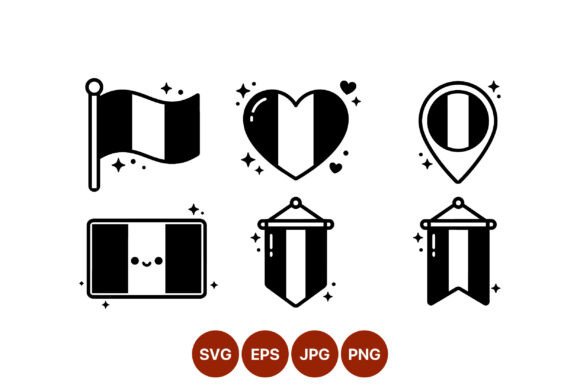
Opening the ZIP folder for Nigerian Flag Black White Icons, I immediately noticed how intentionally restrained it is—not sparse, but focused. These aren’t busy illustrations; they’re confident silhouettes with strong negative space, built around core Nigerian flag symbolism in monochrome. The waving flag has just enough motion to read clearly at small scale. The heart feels warm without being cutesy. The location pin is sharp and legible—not lost in decorative clutter. Even the “smiley rectangle” avoids cartoonish exaggeration, landing somewhere between friendly and dignified. As an embroidery designer who’s stitched hundreds of flag-themed pieces, this restraint is refreshing—and highly practical.
A Real-World Test: Embroidering a Boutique Tote Bag for Lagos Pride Week
Last month, I used the waving flag icon from Nigerian Flag Black White Icons on a natural linen tote bag for a small Lagos-based boutique launching Pride Week merchandise. We chose black thread on off-white fabric—no fill stitch, just clean satin and running stitch outlines. The result? Crisp, confident, and instantly recognizable. Customers commented on how “uncluttered yet meaningful” it felt—especially compared to full-color flag designs that can blur or bleed on textured surfaces. That’s where this set shines: it doesn’t try to do everything. It does one thing—symbolic clarity—very well.
Where It Excels in Real Embroidery Projects
- Custom apparel: Works beautifully on sweatshirts and structured tees—no dense fill stitches to stiffen the fabric. The heart and flag icons scaled cleanly down to 2.5" wide without losing definition.
- Embroidered patches: The clean lines translate directly into clean cut edges and stable backing. I stitched the hanging banner icon onto twill patch material with no puckering—even with light stabilizer.
- Baby embroidery: Used the smiley rectangle (with subtle sparkles removed in vector editing) on a cotton onesie. Gentle stitch density meant softness stayed intact—no scratchy texture against delicate skin.
- Holiday and gift items: The location pin + heart combo made elegant nursery decor on a framed tea towel. Customers appreciated the quiet patriotism—not loud, not political, just heartfelt.
- Etsy listings and digital mockups: Because the files include SVG, PNG, and JPG, I dropped the icons straight into Canva mockups. The black-and-white versatility meant one design worked equally well on charcoal hoodies and ivory aprons—no recoloring needed.
Where to Use It Thoughtfully
This isn’t a one-size-fits-all embroidery file. Its strength lies in intentionality—not universality. Here’s where I pause before stitching:
- Small hoop sizes (under 3"): The decorative sparkles on the hanging banners shrink into indistinct blobs. I either simplify them manually or skip those versions entirely for tiny caps or baby hats.
- Stretchy or thin fabrics: The fine lines in the waving flag’s fringe can distort if hooping tension isn’t precise. Always pair with medium-cutaway stabilizer—and test first.
- Dark or textured backgrounds: On heather grey sweatshirts, the white PNG mockup looked great—but black thread on dark fabric needs slightly heavier satin stitch coverage. I bumped density by 8–10% and added one extra pass on outer edges.
- Curved surfaces (like curved cap fronts): The rectangular smiley and flat banners don’t wrap naturally. I reserve those for flat panels—tote sides, pocket flaps, pillow fronts—not crown seams.
- Frequent-wash items: For kitchen towels or kids’ items, I avoid the ultra-thin “sparkle” details entirely. They’re charming in print—but in thread, they’re fragile. Stick to the core shapes.
What It Adds to Your Finished Product—Beyond Stitching
Using Nigerian Flag Black White Icons elevates more than just appearance—it strengthens perception. A handmade product with these icons reads as considered, not generic. Customers notice the balance: bold enough to stand out, quiet enough to feel personal. For Etsy sellers, that translates to higher perceived value and better repeat engagement—especially among diaspora buyers seeking subtle cultural connection. For craft fairs and boutique branding, it supports cohesion: same icon across tote bags, patches, and tea towels creates visual rhythm without repetition fatigue. And because it’s black and white, it sidesteps color-matching stress—making inventory planning easier for small shop owners.
Practical Designer Notes Before You Stitch
- Test the design on scrap fabric *first*—especially if using textured linen, terry cloth, or stretch knits.
- Check thread color contrast in natural light—not just screen preview. Black thread on navy can disappear; white on cream may lack pop.
- Review stitch density: lighter = softer drape, heavier = sharper detail. Adjust based on end use (baby item vs. wall art).
- Confirm hoop size compatibility—some banners extend wider than standard 4x4 hoops.
- Inspect small details like sparkle points at actual stitch size. Zoom in on your embroidery software preview.
- Test in black-and-white mockups *and* on dark/light fabric swatches before finalizing a product line.
- Use appropriate stabilizer: tear-away for stable wovens, cut-away for knits or lightweight fabrics.
- Verify licensing terms before selling finished embroidered goods or bundling the files in digital products—this set is categorized as Illustrations/Graphics, so commercial use rights should be confirmed directly with the creator.
Final Thought: A Design That Respects the Craft—and the Customer
Nigerian Flag Black White Icons doesn’t shout. It resonates. As someone who’s seen too many overcomplicated flag motifs fail under needle and thread, I appreciate how this set trusts the viewer—and the maker—to find meaning in simplicity. It’s not flashy. It’s functional, flexible, and quietly proud. Whether you’re stitching a single personalized gift or building a cohesive craft business line, these icons give you room to execute cleanly, sell confidently, and connect authentically. Just remember: even the strongest black-and-white statement needs thoughtful execution. Test. Refine. Then stitch with intention.